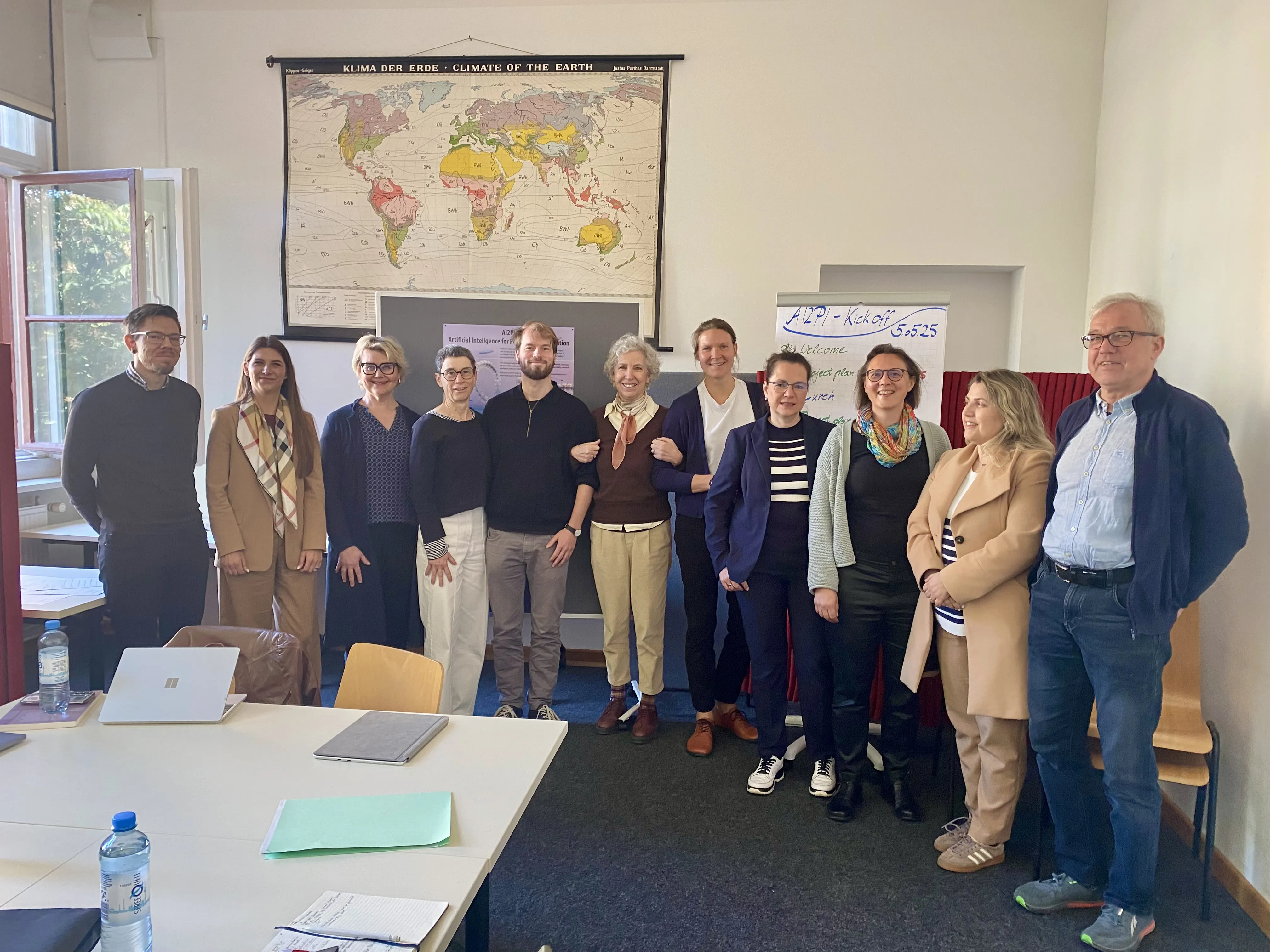
AI2PI Project Launch
BERLIN, May 7, 2025 – The AI2PI Teacher Academy held its official kickoff meeting from May 5-7, 2025, at Humboldt-Universität zu Berlin, bringing together researchers and educators from seven European research institutions to address one of education's most pressing challenges: preparing teachers to critically and effectively engage with artificial intelligence in their classrooms.
From Proposal to Partnership
We succeeded in a highly competitive Europe-wide selection process—only twelve Teacher Academies are being funded out of 117 proposals submitted to the European Commission's Erasmus+ program. This three-year project, coordinated from HU Berlin's Institute of Educational Sciences, brings together universities from Germany, Italy, Portugal, Sweden, Finland, and Lithuania with funding of approximately €1.5 million.
This kickoff meeting marked an important milestone: moving from planning to action. After finalizing the consortium agreement and establishing our governance structures, we gathered in Berlin to align our vision and begin the real work of addressing one of education's most pressing challenges.
Why This Work Matters
The rapid spread of artificial intelligence and particularly the use of chat-based large language models like ChatGPT is fundamentally changing qualification requirements in education. Teachers and teacher education students face new challenges that go beyond technical AI competencies to include critical thinking, adaptability, emotional intelligence, and intercultural communication skills.
But here's the problem: educational institutions across Europe lack coherent, research-based frameworks to support educators in critical, effective adoption of these technologies. This was the starting point of our meeting.
Identifying Core Challenges
During three intensive days of discussion, we identified critical gaps in current educational systems. The integration of AI in education is accelerating, but teachers are often left to navigate this landscape without adequate support. Key challenges include fragmented policies leading to inconsistent implementation across regions, the persistent "digital native" myth that assumes students intuitively understand technology, and insufficient frameworks for teachers to evaluate AI bias and ethical implications.
The challenge we face is developing a concept that can be used across Europe—one that respects national differences while establishing shared standards. We've chosen a design-based research approach that will allow us to first develop a competency model for AI literacy in schools and teaching, then assess the current state in each of our participating countries through targeted surveys. This groundwork is essential: we need to understand where teachers are now before we can effectively support them in developing new competencies.
From Research to Practice
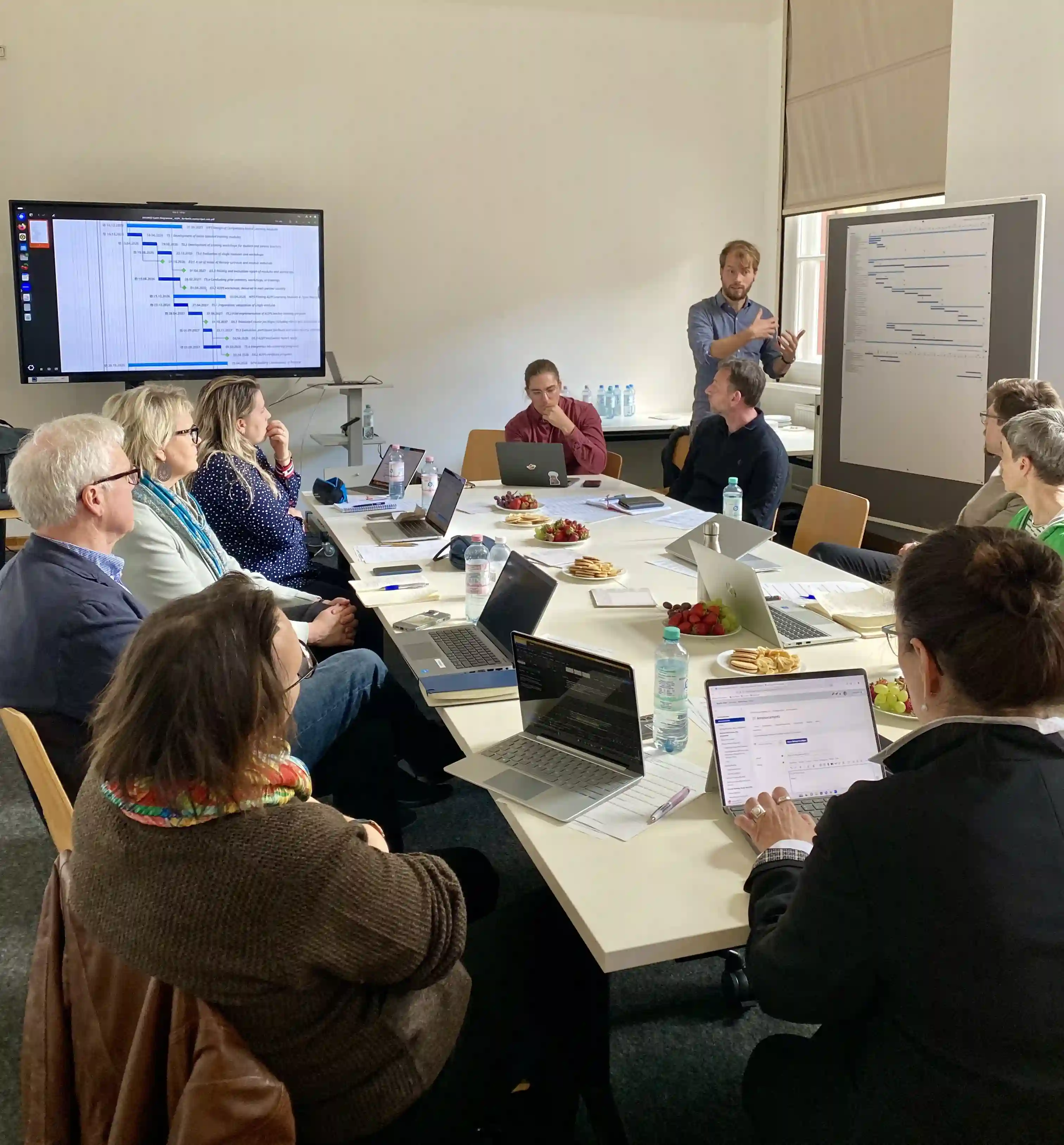
The kickoff meeting wasn't just about problem identification—it was about building the foundation for practical solutions. We established shared problem statements, reviewed work packages spanning from scoping reviews to practical teacher training modules, and developed our dissemination strategy.
Distinguished guests including Prof. Dr. Niels Pinkwart, Vice President for Academic Affairs at HU Berlin, and Prof. Dr. Stephan Breidbach, Director of the Professional School of Education, joined us to emphasize the importance of preparing educators for AI's transformative impact on teaching and learning. Their presence underscored the institutional commitment behind this work.
Based on our assessments, we will develop training concepts that will be tested and refined with practicing teachers. Schools are integrated into the project from the beginning. Teacher education students will also benefit, as the concepts we develop will be used in both university teacher education programs and in-service professional development.
A Design-Based Approach
We're taking a systematic approach to integrating AI competencies into pedagogical practice. The consortium will develop a competency framework for AI literacy, conduct surveys to assess current capabilities across participating countries, and create practice-oriented professional development programs tailored to teachers' individual needs.
This isn't about replacing teachers with technology. It's about positioning teachers as essential mediators who can help students navigate an AI-shaped future with critical awareness and ethical understanding. Teachers need to be equipped not just with technical skills, but with the pedagogical insight to evaluate when, how, and why to use AI technologies—and when not to.
The Road Ahead
We established a robust working structure: monthly virtual meetings during the first week of each month to maintain momentum, and a schedule of in-person gatherings across Europe. The next major meeting is planned for the ECER conference in Belgrade in September 2025, followed by meetings in Innsbruck/Brixen, Tampere, Portugal, and Kaunas.
The journey from proposal to kickoff has been long, but these three days in Berlin demonstrated the energy and commitment of all partners. We've moved from "what if" to "here we go"—and this step makes all the difference.